
We provide a range of effective options for improving the appearance of acne scarring. Treatments may include polynucleotide injections and other advanced skin-rejuvenation techniques designed to smooth, repair and refine the skin. To find out which acne scar treatment is most suitable for your skin, please contact the Skin Architect team for personalised advice.
Acne scarring is a common concern, affecting around one-third of people who experience moderate to severe acne. Any type of acne lesion has the potential to scar, although the risk increases when breakouts are more inflamed or widespread. Scarring develops as the body attempts to heal the inflammation caused by acne, producing new collagen that can lead to uneven texture, indentations or raised areas. Colour changes may also occur after inflammation, resulting in lingering marks.
Acne scars are generally grouped into two categories: atrophic, which appear as depressions in the skin, and hypertrophic, which are raised. Changes in pigmentation can also be present.
Icepick scars – Narrow, deep scars that create small indentations in the skin. These are the most frequent type of atrophic acne scar.
Post-inflammatory hyperpigmentation – Brown marks that remain after inflammation has settled. These are not true scars but can take time to fade.
Post-inflammatory erythema – Pink or purple marks that occur after acne has healed, often lasting longer in fairer skin types.
Before and after treatment using microneedling and a professional resurfacing peel.
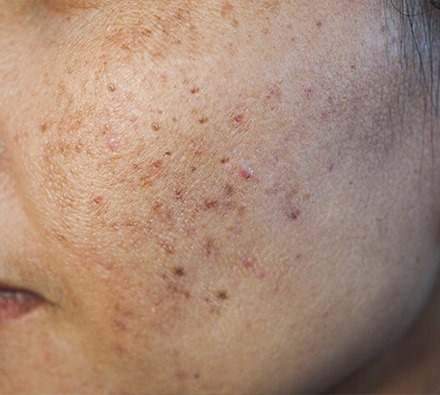
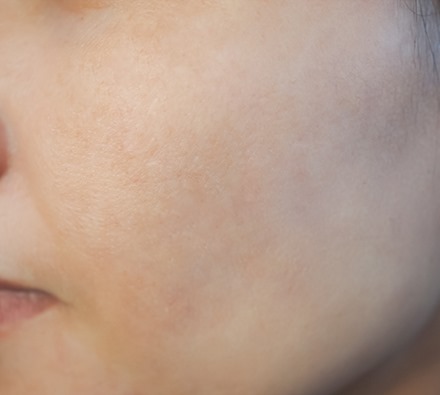
Treating acne scarring begins with ensuring active acne is under control to prevent new scars from forming. At Skin Architect, we offer prescription-strength skincare and in-clinic treatments that help reduce inflammation and support clearer, healthier skin. A consultation with our medical team is recommended so we can determine the most suitable approach for your skin.
Red marks left behind by acne are known as post-inflammatory erythema. These marks occur when inflammation damages tiny blood vessels in the skin.
Recommended treatment options:
• Targeted light-based therapy to reduce persistent redness
• Chemical resurfacing treatments that gently exfoliate and brighten the skin
Several sessions may be required, typically spaced one month apart. These treatments are suitable for most skin types, although some light-based options may only be recommended for lighter skin tones.
Skincare support:
Brightening serums and antioxidant products can help reduce the appearance of lingering redness over time.
Brown discolouration after acne is known as post-inflammatory hyperpigmentation. These marks often take longer to fade without targeted treatment.
Recommended treatment options:
• Chemical resurfacing peels to exfoliate deeper layers and promote new, even-toned skin
• Pigmentation-targeting therapies for stubborn areas
Multiple sessions are usually required.
Skincare support:
Daily SPF is essential, along with pigment-balancing products that help fade dark marks and prevent future discolouration.
Indented scars include icepick, boxcar and rolling scars. These forms of scarring occur when deeper layers of skin are damaged during inflammation.
Recommended treatment options:
• Microneedling to stimulate collagen production and smooth uneven texture
• Fractional resurfacing treatments to improve tone, texture and visible indents
A course of sessions is often required for best results.
Additional options for deeper scarring:
For more severe or deeper scars, a doctor may recommend techniques such as subcision, plasma-based treatments or dermal fillers to lift and soften the indentations.
Skincare support:
Prescription-strength products may be advised to enhance results and support long-term skin improvement.
Clients who have both dark marks and textural indents often benefit from combination treatments.
Recommended treatment options:
• Microneedling paired with a resurfacing peel applied immediately afterwards to enhance penetration of active ingredients
This dual approach can significantly improve both pigmentation and texture by boosting collagen while brightening the skin.
Skincare support:
Prescription products may be required for optimal improvement of both pigmentation and deeper scarring.
Location: Skin Architect (Inside Listers Health)
Listers Mill, Heaton Road, Bradford, BD9 4SH
E-mail: info@skinarchitect.co.uk
Phone : 01274 982121
If you would like to find out more about a treatment we offer then a callback from a member of our team is a great option.
Please complete the form below so that we can reach you and provide us with some details on your enquiry so the most suitable member of our team can give you a call. You will have the opportunity to select the date of your callback and either a morning, afternoon or evening call back slot.
Please note we are unable to provide call backs on Sunday’s or Bank Holidays.